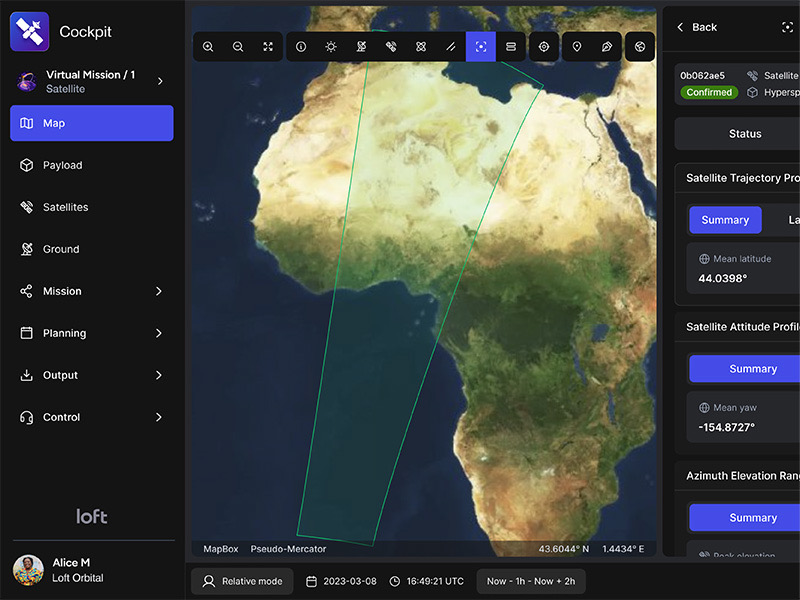
Today, Loft’s on-orbit infrastructure provides high-performance compute, connectivity, and multi-sensing resources to power rapid, AI intelligence from space.
In addition to the ability to run your own applications, a marketplace of AI agents and software applications will allow users to task satellites directly for near real-time intelligence for maritime monitoring, disaster relief, change detection, and more.
Loft and NASA’s Jet Propulsion Laboratory deploy first reported vision language model on-orbit for Earth observation analysis
Altair is a 10-satellite constellation for near real-time change monitoring that will enable customers to rapidly access and deploy space-based AI applications.
Leveraging the AI-enabled Altair constellation, government and commercial customers will have access to a diverse set of Earth observation sensors to deploy applications across a variety of use cases.
Low-Latency Object Detection
Powerful onboard compute resources support AI/ML processing at the edge to enable low-latency object detection for applications such as vessel detection, asset monitoring, and border security.
Earth Sensing & Monitoring
A variety of on-orbit imagers paired with edge processing capabilities enable Earth sensing applications such as wildfire detection, vegetation monitoring, and deforestation tracking.
On-Orbit Security & Autonomy
Virtual Mission customers are using Loft’s in-space infrastructure to develop and test a range of applications including cybersecurity tools, compression algorithms, and autonomy software.
Multi-Functional Uses
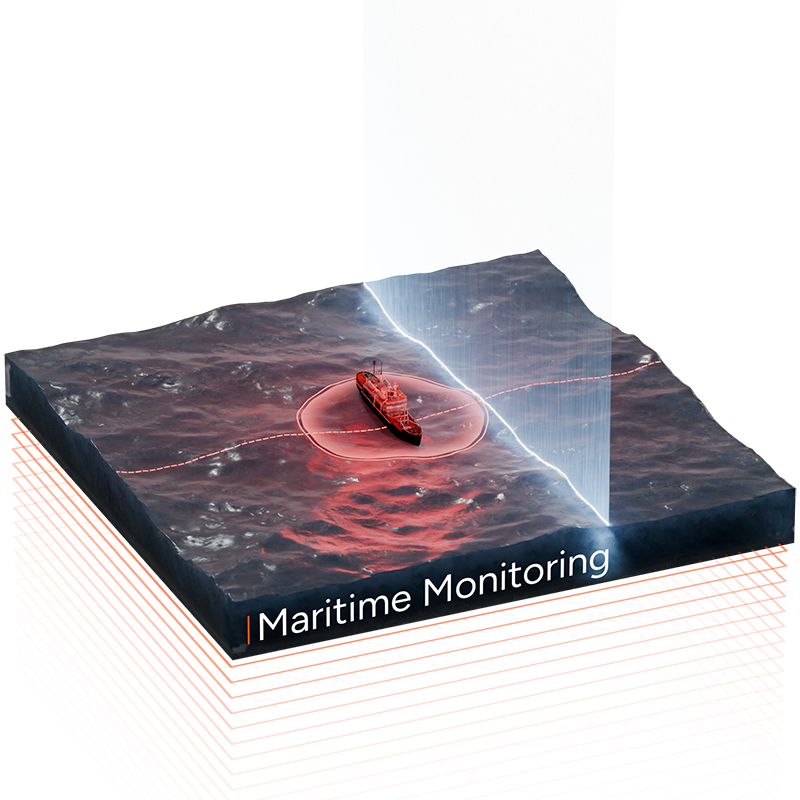
Maritime Monitoring
Enhance maritime awareness with automated vessel tracking and anomaly detection in waterways
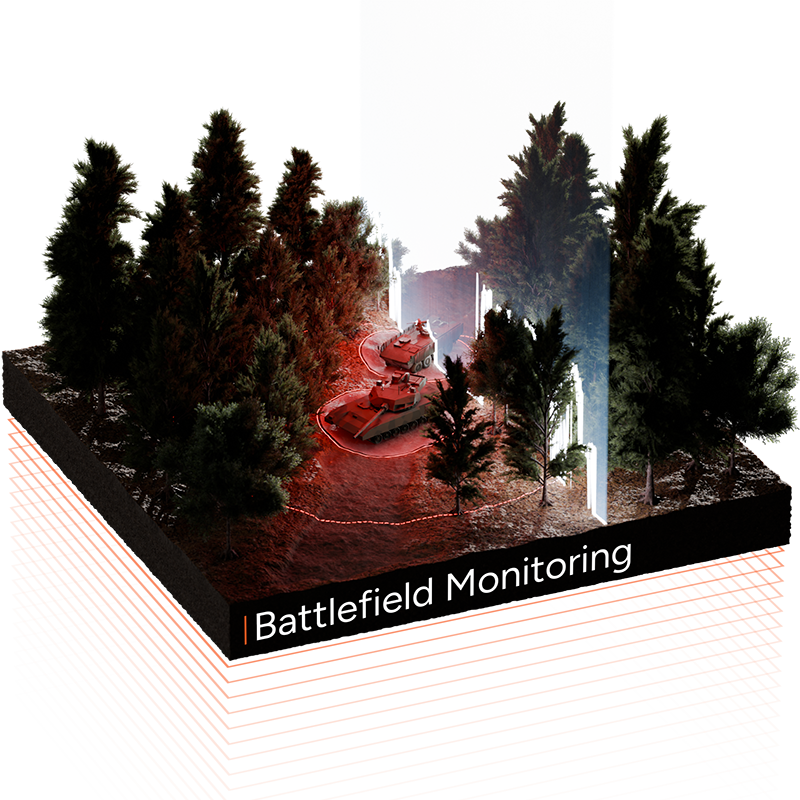
Battlefield Monitoring
Gain a tactical edge with real-time intelligence on asset movements for rapid decision-making
Border Security
Strengthen national security with persistent surveillance and AI-driven insights at your nation’s borders
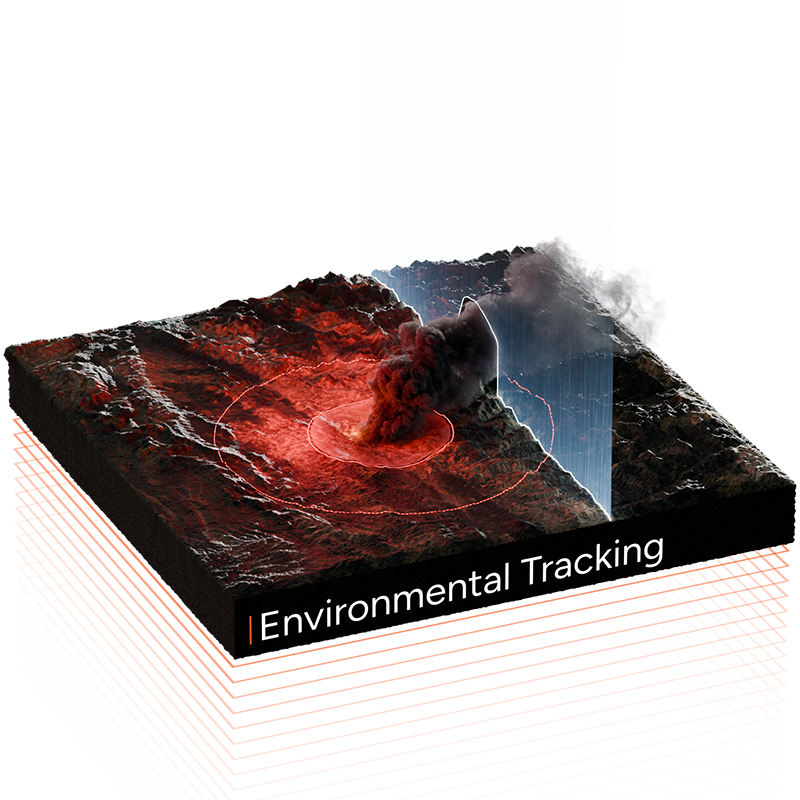
Environmental Tracking
Rapidly detect & respond to environmental changes, from deforestation and wildfires to climate-related disruptions
On-Orbit Resources
Take advantage of sensing, compute, and connectivity resources already in space by deploying your applications on Loft’s fleet of satellites. Each satellite carries a unique combination of imagers, software defined radios, CPUs, GPUs, and connectivity resources to support your mission.
On-Orbit Imagers
Task a wide range of sensors including: Panchromatic, Thermal Infrared, Multispectral VNIR, and Hyperspectral VNIR sensors.
Software-Defined Radio
Each spacecraft is equipped with a configurable RF payload that provides RF reception coverage across UHF, L-Band, S-Band, and more.
Compute & Processing
High-powered CPUs and GPUs allow customers to run data and processing-heavy AI apps at the edge – unlocking low-latency insights when you need them.
Connectivity
Access dozens of global ground stations to support a range of mission requirements or leverage an inter-satellite link for near real-time connectivity.
Developer Lifecycle
Develop
Step 1Build In a Secure Environment
Loft’s virtual mission platform, Ultimate Edge, provides a containerized, cloud-based environment replicating the edge processing framework found on our satellites.
Deploy
Step 2Deploy Your App on Loft Satellites
We deploy your application directly to one or more of Loft's satellites. Once deployed, we commission your application and ensure its ready to start leveraging the available on-orbit resources.
Execute
Step 3Execute Your Mission
Start executing data collection using Cockpit mission control and leverage onboard compute to apply AI/ML at the edge. Downlink insights via our global ground station network or reduce latency and rapidly downlink data via inter-satellite link.
NASA’s JPL has selected Loft Orbital to fly demonstrations of its AI software on-orbit, with flights beginning in June 2026 and expanding through 2028.
SmartSat CRC to deploy a wildfire detection application on Loft’s AI-enabled satellite infrastructure to demonstrate early and low-latency detection of small smoke signatures.
Read more about how Helsing has successfully deployed advanced AI for near real-time onboard radio frequency signal intelligence using Loft’s YAM-6 satellite.
Scientific Systems Company, Inc. (SSCI) successfully conducted initial demonstrations of its AI-enabled edge processing system onboard Loft’s YAM-3 satellite as part of the Prototype On-Orbit Experimental Testbed (POET) experiment for the Space Development Agency (SDA).
SkyServe’s Mission Denali will deploy SkyServe’s STORM in-space edge computing platform on Loft’s space infrastructure. SkyServe STORM will leverage multispectral and hyperspectral data from Loft’s YAM-6 satellite.
Little Place Labs is deploying software to Loft’s YAM-6 satellite to pair their cutting-edge analytics with Loft’s space infrastructure and enhance maritime domain awareness under a US Air Force Phase 2 STTR.