JPL to leverage Loft’s AI-enabled, on-orbit infrastructure to support NASA Earth observation research objectives
Today, Loft announced an agreement with NASA’s Jet Propulsion Laboratory (JPL) to host and fly demonstrations of JPL artificial intelligence (AI) software on Loft’s AI-enabled space infrastructure. The demonstrations, part of the Federated Autonomous MEasurement (FAME) project funded by NASA’s Earth Science Technology Office (ESTO), will advance on-orbit AI capabilities for Earth science remote sensing and autonomous ground processing.
The program will leverage Loft’s infrastructure to validate JPL AI software in the space environment, with flight demonstrations beginning in June 2026. Additional deployments on future AI-enabled satellites will take place in 2027 through 2028.
“This collaboration with JPL represents a significant step forward in applying artificial intelligence where it matters most in orbit, processing data in near-real time to support urgent decisions on Earth,” said Paul Lasserre, General Manager, AI for Space at Loft. “Loft was built to give organizations like JPL fast, simple access to space, and we are proud to be part of NASA’s push to harness commercial infrastructure for AI-driven Earth science applications.”
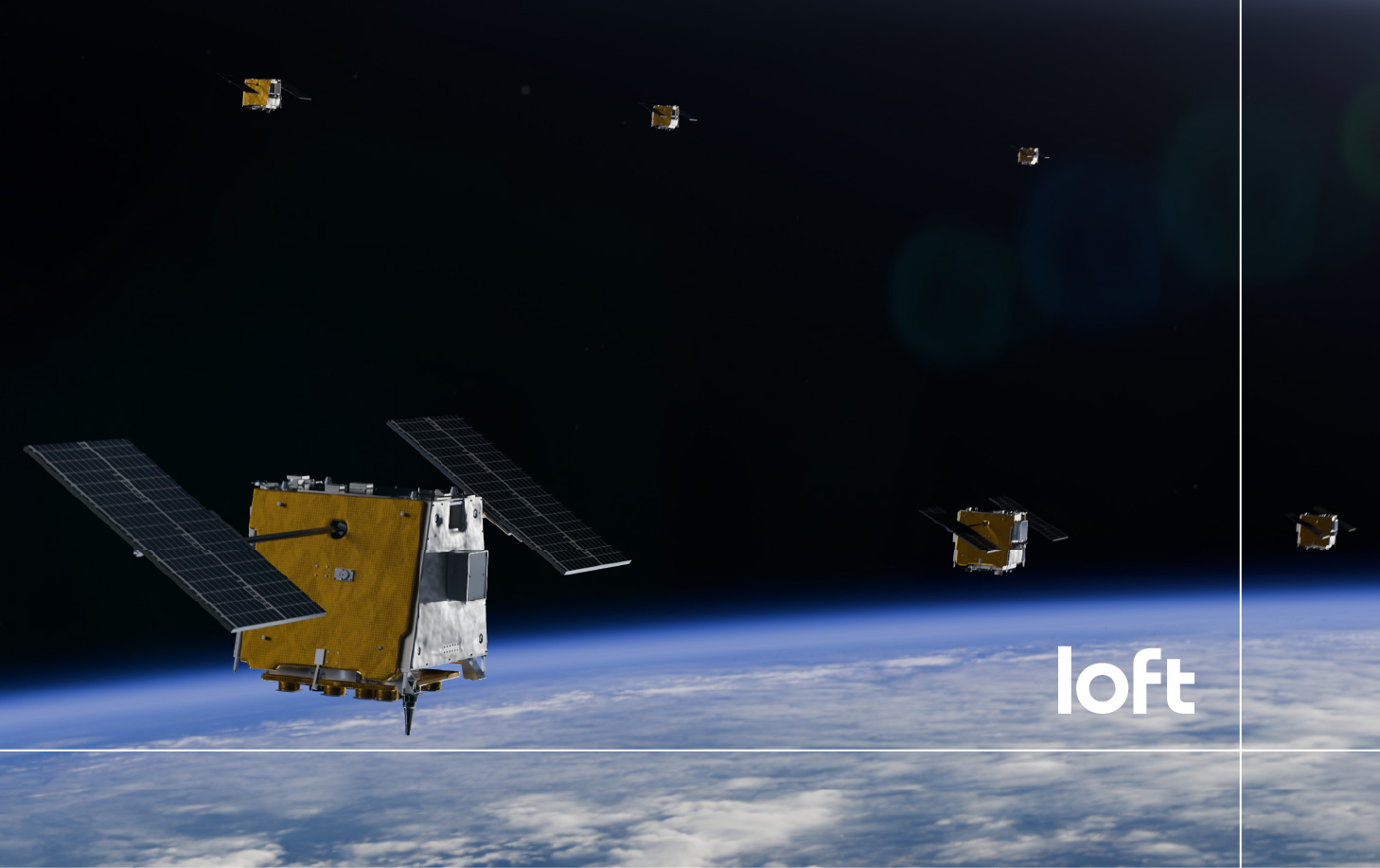
JPL’s AI software is aimed at advancing NASA remote-sensing capabilities, reducing data latency by removing humans from the processing loop and delivering near real-time insights on wildfires, flooding, and other natural disasters. Loft’s on-orbit infrastructure is flying a high-performance processing architecture that enables edge computing and the deployment of lightweight AI applications.
The software will demonstrate autonomous tip-and-queue tasking without ground intervention, which has the potential to dramatically shorten the time between satellite observation and actionable data reaching scientists, emergency management officials, and first responders. The spacecraft involved in FAME will utilize intersatellite links, meaning they can communicate with one another or with Earth rapidly and anytime.
The work contributes to NASA’s broader Earth science objectives while demonstrating a scalable model for hosting government AI payloads on commercial satellites. And, while NASA has deployed AI and autonomy software previously, the collaboration with Loft on FAME will enable the agency to scale up and help pathfind widespread adoption of its software on commercial platforms.